
ECS SPECIALIZED SOLUTIONS
Specialized technology solutions for specific business requirements. ECS combines professional hardware, software, connectivity and technical expertise to design, deploy and support reliable, secure and scalable solutions.
1. Inventory Solutions & Equipment Rental
Faster stocktaking. Reliable data. Professional equipment when you need it.
Accurate inventory is essential for retail stores, pharmacies, warehouses, distribution centres and organisations managing large numbers of products or assets. ECS delivers complete inventory solutions combining professional barcode scanners, mobile computers, RFID technologies, software and connectivity to reduce manual work and improve stock visibility.

Our services range from short-term equipment rental for an annual stocktake to fully integrated inventory environments connected to ERP and Warehouse Management Systems (WMS). ECS supports the complete process: requirements analysis, equipment selection, application preparation, configuration, deployment, integration and technical support.
Inventory Equipment Rental – a proven ECS service
Avoid purchasing devices that may remain unused for most of the year. ECS provides flexible rental programmes for anything from a small retail stocktake to a large, multi-warehouse inventory project. You choose the number of devices and the rental period required for your operation.
The equipment can be delivered prepared for the project, helping your team begin work quickly. Depending on the agreed solution, the service may include pre-installed inventory applications, Greek-language workflows, device and barcode configuration, data-file preparation, user instructions, technical assistance and replacement arrangements.
The historic ECS rental service was built around configurable CipherLab handheld terminals designed for demanding professional use. Depending on the current model and availability, rental devices may offer rugged construction, extended battery life, local storage for many thousands of item codes and optional pistol-grip accessories. Exact specifications are confirmed in the proposal for each project.
- Annual and periodic stocktakes
- Retail stores, pharmacies and store chains
- Small and large warehouses
- Seasonal operations and temporary facilities
- Pilot projects and short-term data collection needs
A simple rental process
- Tell us the number of locations, items, users and required dates
- Select the appropriate handheld devices and software workflow
- ECS configures, tests and prepares the equipment
- Your team performs the inventory with technical support available
- Data is exported or synchronised and the equipment is returned
Barcode Inventory Solutions
Replace slow manual entry with structured digital data collection. Professional barcode and QR scanners enable employees to identify items quickly, confirm quantities and transfer reliable information to business applications.
- Stock counting and verification
- Goods receiving, picking and replenishment
- Transfers between stores or warehouses
- Asset identification and price checking
- Export or synchronisation with business systems
Choose the Right Inventory Workflow
Different operations require different levels of mobility and integration. ECS evaluates the number of products, users, locations and existing software before recommending the appropriate workflow.
- Bluetooth or wired scanners for simple, economical stocktaking
- Batch-mode scanners for collecting codes away from a workstation
- Portable terminals with configurable offline inventory applications
- Mobile computers connected online to ERP or WMS
- RFID workflows for faster identification of many tagged items
Professional Mobile Computers and PDAs
Mobile computers combine barcode scanning, processing and wireless connectivity in one robust device. Employees can scan products, view information, validate quantities and update operations directly at the point of activity.
- Devices designed for intensive professional use
- Charging cradles, cases and spare batteries
- Wi-Fi configuration and application installation
- Compatible central management where required
RFID and Asset Tracking
When one-by-one barcode scanning is not sufficient, RFID can provide a higher level of automation. Multiple tagged items can be identified without direct line-of-sight scanning, supporting inventory, asset tracking, inbound and outbound flows and automated control points.
- Handheld and fixed RFID readers
- Antennas, portals and printer/encoders
- RFID tags suited to the operating environment
- Software integration and data utilisation
ERP and WMS Integration
The greatest value is created when data collection becomes part of the existing workflow. ECS can connect inventory equipment with ERP, WMS and other applications, creating a continuous process: scan, identify, validate, update and synchronise.
Solutions for Different Business Sectors
The legacy ECS specialised-solutions portfolio supported much more than annual warehouse counting. The same data-capture principles can be adapted to sales, storage, transport, healthcare and public-sector operations.
- Retail and pharmacies: stock counts, price checks and replenishment
- Warehouses: receiving, storage-location control, picking and dispatch
- Transport and distribution: route preparation, proof of delivery and parcel identification
- Healthcare: reliable identification of medicines, samples, blood products and patient-related items
- Public sector and multi-site organisations: structured collection and timely availability of operational data
Business Benefits
- Faster and more accurate stocktaking
- Reduced errors and manual entry
- Professional equipment without unnecessary capital investment
- Flexible capacity for peak and seasonal requirements
- Prepared devices, local expertise and technical support
- Better visibility of inventory and assets

2. Data Protection & Disaster Recovery
Protect your data. Recover your business.
Business continuity depends on more than simply having a backup. Hardware failure, human error, software problems, cyberattacks and major infrastructure incidents can interrupt operations and place critical information at risk.
ECS designs Data Protection and Disaster Recovery solutions with one practical objective: enabling the organisation to restore its systems and resume operations within timeframes aligned with real business priorities.
Backup and Recovery
A modern strategy creates reliable copies of critical information, protects them against alteration and verifies that they can be restored. The architecture can cover physical servers, virtual machines, databases, files, business applications, Microsoft 365, cloud workloads and remote sites.
Disaster Recovery
Backup primarily protects information. Disaster Recovery protects operational capability. A DR architecture can replicate workloads to a secondary location or cloud environment and orchestrate their restoration following a major disruption.
HPE Zerto
For virtualised and cloud environments with demanding availability requirements, ECS can design architectures based on HPE Zerto technologies. Continuous replication, orchestration and recovery automation can reduce potential data loss and downtime, according to the project design and agreed objectives.
Cyber Resilience and Ransomware
Modern protection must address ransomware and cyber incidents alongside conventional failures. A layered approach may combine backup, replication, immutable copies where appropriate, segmentation, monitoring and recovery testing.
Business-aligned RPO and RTO
Recovery Point Objective (RPO) defines how much recent data the organisation can afford to lose. Recovery Time Objective (RTO) defines how quickly a service should return to operation. ECS helps classify critical applications and design protection according to these objectives.
Our Approach
- Assess systems, risks and business priorities
- Protect data and workloads
- Replicate according to continuity requirements
- Monitor operations and alerts
- Recover services according to a defined plan
- Test recovery procedures regularly
Business Benefits
- Reduced risk of data loss
- Faster recovery of critical services
- A clear and measurable continuity plan
- Stronger resilience against cyber threats
- Recovery testing and technical support from ECS
3. Industrial Solutions
Reliable connectivity for industrial environments and remote sites.
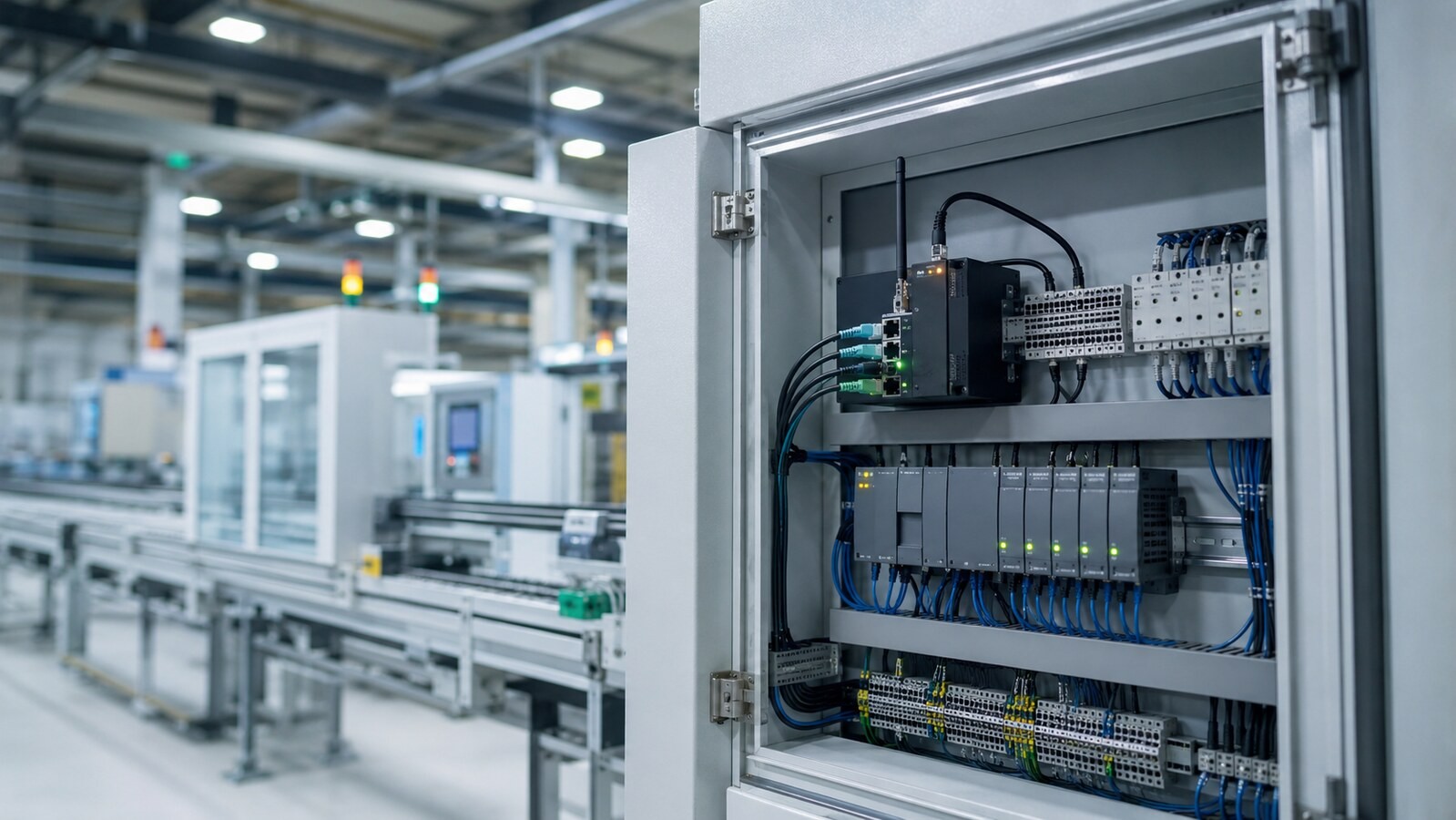
Factories, energy installations, transportation systems and remote sites require networking equipment designed to operate reliably beyond the traditional office. ECS delivers industrial networking and IoT solutions that securely connect machines, PLCs, sensors, cameras and remote equipment with central systems and cloud platforms.
By combining industrial routers, gateways, switches and remote management services, we create an architecture suited to the connectivity, security, availability and environmental requirements of each project.
Industrial Connectivity
Teltonika industrial equipment and other technologies selected for the project can combine 4G/LTE or 5G, Ethernet, Wi-Fi, Dual SIM, WAN failover, VPN, digital I/O, serial interfaces and positioning capabilities.
Connect Existing Equipment
Many installations use PLCs and serial devices created before IP networking and cloud platforms became standard. Industrial gateways can bridge these systems to Ethernet or cellular environments and support data exchange through protocols such as Modbus, MQTT, RS232 or RS485, depending on the selected equipment.
Primary or Backup Connectivity
At a remote site, cellular networking can serve as the primary connection or as an independent backup path. With correctly configured failover, the router can automatically switch connectivity when the main WAN becomes unavailable.
Secure Site-to-Site Communications
VPN technologies can securely connect remote locations with headquarters, a data centre or the cloud. The solution is designed around security policies, required traffic flows and the expected level of availability.
Typical Applications
- Manufacturing, automation and PLC connectivity
- Energy, utilities and remote installations
- CCTV, surveillance and access control
- Transportation, vehicles and mobile infrastructure
- Retail stores, kiosks, POS and remote branches
- Digital signage and smart buildings
- Environmental monitoring and IoT deployments
Business Benefits
- Stable connectivity in demanding environments
- Continuity through network redundancy
- Remote access and diagnostics
- Integration of existing industrial equipment
- Secure and scalable deployment
- Fewer technical site visits

4. Centralized Device Management
One platform. Complete visibility. Remote control.
Managing a few devices is simple. Monitoring tens or hundreds of routers, gateways and installations across different locations is a significant operational challenge.
ECS implements centralized management solutions that give IT teams improved visibility of distributed infrastructure and the ability to monitor, configure and troubleshoot compatible devices remotely.
Centralized Monitoring
A single interface can display device status, availability, connectivity, signal quality and other indicators, depending on the deployed platform. Technical teams can identify problems faster without waiting for a user report.
Remote Configuration and Maintenance
Configuration changes, restarts, firmware updates, configuration backups and diagnostics can be performed remotely on compatible equipment. This improves consistency and reduces on-site interventions.
Secure Access to Third-party Devices
With platforms such as Teltonika RMS, authorised users may, depending on the architecture, reach equipment behind a remote router: PLCs, industrial computers, servers, cameras, controllers, web interfaces and other network devices.
Alerts and Proactive Management
Alerts can notify the team when a device goes offline or an indicator exceeds a defined threshold. The aim is to move from reactive support to proactive management, with faster resolution and less travel.
Ideal For
- Retail chains and branch networks
- Warehouses, factories and energy installations
- CCTV networks and digital signage
- Transportation and mobile infrastructure
- IoT deployments and multi-site organisations
Business Benefits
- Unified visibility of distributed infrastructure
- Faster diagnosis and response
- Reduced costs and on-site visits
- Consistent configurations
- Scalability as the device estate grows
- Improved operational availability